
Industry
Rejected athlete lookalikes pair: what to fix before resubmitting
Fix a rejected athlete lookalikes pair: read the notice against four standards, then repair the photography, the evidence file and the releases.
What to take away
- Missing paperwork produces a rejection notice rather than a place in the queue, so the fix starts with the notice.
- Repair in this orderthe photography session, the evidence file, the signed likeness release, then data handling.
- A pair that clears all of that still fails when the source photo is uncredited or the kit season is unnamed.
- Canadian organizers treat submitted face images as personal information and need a stated purpose plus a deletion date.
- Evidence files travel with the pair, so access limits and encryption belong in the resubmission plan.
Read the rejection against four standards
Match each line of the rejection notice to one of four standards: consent, identity, evidence or role match. These are the standards this review applies, and a contest desk may add its own. The table pairs each with its common failure and its repair.
Four standards for submission
- Consentsigned release from each person
- Identityphoto ID matching submitted face
- Evidencesix unedited frames, one session
- Role matchjersey number, position, era
| Standard | Common failure | What to resubmit |
|---|---|---|
| Consent | One form covering two names | A signed release from each person |
| Identity | Nicknames on the form | Photo ID matching the submitted face |
| Evidence | Frames from mixed phone cameras | Six unedited frames from one session |
| Role match | Generic team colors | Jersey number, position, and era |
A stadium crowd reads posture, kit, and position before it reads a face, and the file is reviewed in that order. A pair that shares a jawline but not a role will not publish, however clean the paperwork is.
Fix the photography first
Reshoot before anything else when the notice cites lighting or mixed cameras. When two faces are shot minutes apart under one setup, a viewer compares the people. When they arrive from different cameras, the viewer compares the cameras instead.
One session vs mixed cameras
One session
- Viewer compares
- The people
- Light position
- Same
- Lens
- One
- Role match
- Season named
Mixed cameras
- Viewer compares
- The cameras
- Light position
- Different
- Lens
- Multiple
- Role match
- Era mismatch
The reshoot needs one photographer, one lens and one light position. Each frame should carry a timestamp and ship in an unedited format. Cropping and skin smoothing are allowed only when the same edit is applied to both faces in the pair.
Sport kits change every season. A pair shot in current kit against a reference photo from an older era fails the role match test even when the faces align. Name the season on the sheet, along with the league and the uniform.
Rebuild the evidence file
Rebuild the file from the list below and send nothing that is not on it. Extra frames from different phones weaken the comparison instead of strengthening it, so the six frames are all the file needs.
Evidence file contents
- Two signed likeness releases, each with a witness line and a date.
- Six unedited frames from one camera, one lens, and one light position.
- A side by side sheet with the real athlete photo credited to its source.
- A short note naming the era, the league, and the uniform.
- Contact details for the person who shot the frames.
Phone cameras now compute a face before the shutter closes, which is why provenance checks come first for any athlete pair whose frames were shot on a phone. The photographer's contact details are what let a reviewer run that check.
Redo the consent paperwork
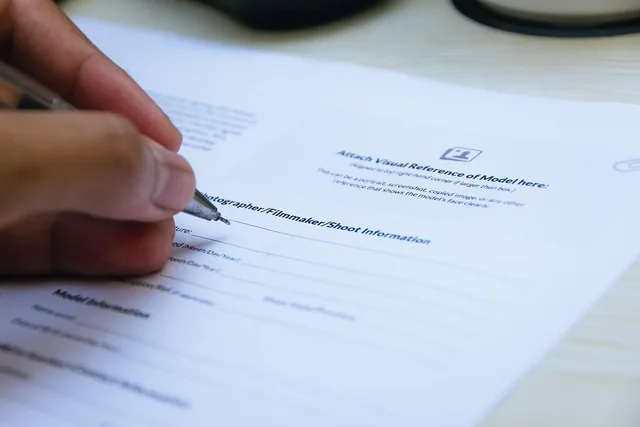
A performer can consent to a comparison and still leave a publicity problem open. A recognizable likeness used in promotion can draw a right of publicity claim, so the release should name the use, the territory, and the term.
Consent and paperwork rules
- Release names use, territory, term
- PIPEDAstated purpose and retention limit
- Californiastate line for likeness consent
- Publicity claim risk from promotion use
Face images count as personal information under PIPEDA, the federal Canadian privacy law enforced by the Office of the Privacy Commissioner of Canada. The Commissioner's guidance says an organization should tell people why it needs their personal information before or at the time of collection, and keep personal information only as long as it is needed to serve those purposes.
In the United States, states such as California treat likeness rights apart from federal privacy law. California Civil Code section 3344 covers commercial use of a person's likeness, so a national submission form still needs a state line for consent.
A rejected pair and its resubmission
First submission: two frames, two phones, one release. Rejection cited inconsistent lighting and a missing release. Second submission: six frames from one session, two signed releases, one credited source photo. Published nine days later.
Rejected vs published pair
Rejected
- Frames
- Two
- Cameras
- Two phones
- Releases
- One
- Source photo
- Missing
- Outcome
- Rejected
Published
- Frames
- Six
- Cameras
- One session
- Releases
- Two signed
- Source photo
- Credited
- Outcome
- Published in 9 days
The gap was paperwork and camera discipline, not resemblance. The second submission changed three things: six frames from one session instead of two from two phones, two signed releases instead of one, and a credited source photo.
Most sport rejections follow that pattern, and the fix is a resubmission plan rather than a new face.