
Industry
Athlete lookalikes submission rules: what contest desks check first
Athlete lookalikes submission rules: what contest desks check first, the judging order, photo consent under biometric laws, prize tax and disqualifiers.
What to take away
- Paperwork is checked before resemblance. Age, residency and a signed release decide who reaches the judging table.
- Many US athlete lookalike contests score face match, wardrobe accuracy and crowd response, in roughly that order.
- Entry photographs are personal data, so organizers handle them under data security rules even at a small county fair.
- NFL, NBA, MLB and NCAA marks are the fastest way to lose a strong match: team names, logos and uniform designs are protected.
Where US athlete lookalike contests actually run
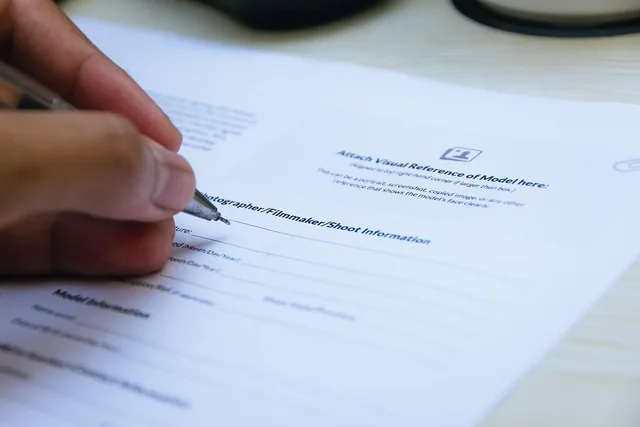
County fairs remain the biggest venue for these contests in the United States, running lookalike classes beside pie judging and livestock shows. A typical county fair entry form borrows its structure from other open classes, with a division, a class number and an entry fee.
Mall promotions, radio stations and sports bars run them too, often tied to a playoff run or a draft night. Rules differ, but the first three checks rarely do.
The entry checklist before judging starts
Organizers work from a fixed list. Bring every item or you will be turned away at the desk.
Entry checklist before judging
- Government photo ID with date of birth
- Proof of county or state residency
- Signed liability release and photo consent
- Entry fee receipt, cash or card
- Costume declaration for branded items
The five items the desk asks for, in the order it checks them:
- Photo IDshowing your age, so the desk can place you in the right age bracket. Entrants under 18 usually need a parent or guardian to sign for them.
- Proof of residency, such as a driver's license or utility bill with an address inside the area the entry form names: the county, an adjacent county, or the station's listening area for a radio promotion.
- The signed release, the waiver and photo release printed on or attached to the entry form, which lets the organizer photograph you and use the images.
- The entry fee or receipt, if the class charges one, matched to your division and class number.
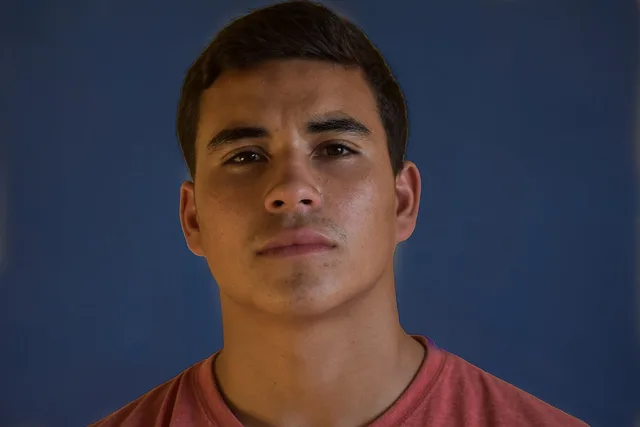
- An unedited headshot, recent and without filters, for the photo intake table.
Age and residency come first because insurance, age brackets and prize eligibility depend on them. Waivers come second, since a contest cannot run without signed releases. Many county and state fairs belong to the International Association of Fairs and Expositions, but each fair board writes its own premium book, so the exact age brackets and residency radius are in that fair's book, not in a national rule. Look for two lines in that book: the age brackets, usually a youth division with a printed cutoff and a parent or guardian signature and an adult division above it, and the residency radius, printed as the county, the county plus named adjacent counties, or a named list of ZIP codes or school districts.
Judging sequence and scoring order
The sequence is stable across most US events, even when the scorecard is not.
Judging sequence and scoring order
- Eligibility deskphoto ID, residency, release
- Photo intakeone unedited headshot
- Wardrobe reviewcolors, jersey number, marks
- Stage walk and pose, timed round
- Judge tally or crowd vote, then tiebreak
The five steps run in this order:
- Eligibility desk:ID, age bracket, residency and the signed release.
- Photo intake:the unedited headshot is logged against the entry number.
- Wardrobe check:jersey number and team colors are allowed; the registered marks of the NFL, NBA, MLB and NCAA are flagged, along with any unlicensed team name or logo.
- Stage:each entrant walks and poses, and judges score face match, wardrobe accuracy and crowd response, in that order of weight.
- Final tally:scores are added, ties go to a second walk or a crowd vote, and a fan vote is added where the promotion uses one.
Contest practice treats entry and judging as separate phases, which is why resemblance is often scored last. Contest rules normally let organizers disqualify an entry at any stage.
Example: a county fair scorecard
County fair scorecard
| Stage | What officials check | Common disqualifier |
|---|---|---|
| Entry desk | Photo ID, age, residency | Out of county entry |
| Photo intake | Unedited headshot | Heavy filter or an old photo |
| Wardrobe | Jersey number, colors | Registered league trademark |
| Stage | Walk, pose, crowd response | Prop that blocks other entrants |
That table follows what small fair boards tend to publish. Larger promotions add a fan vote, which can outweigh resemblance.
Photographs, consent and biometric privacy
Entry photos contain faces, and face data counts as biometric data in most privacy frameworks. In the United States, FTC guidance on data security applies to organizers holding submitted images, covering retention and safe storage.
Some states go further and regulate face data directly. Illinois has its Biometric Information Privacy Act. In Texas, the Capture or Use of Biometric Identifier Act prohibits capturing an individual's biometric identifiers, including a record of face geometry, for a commercial purpose unless the person is informed and consents before the capture, and requires captured identifiers to be destroyed within a reasonable time. A promotion that runs entry photos through face-matching software to rank resemblance should read those rules before it opens entries.
Where a page says Canada, PIPEDA governs facial images collected by private organizations. Contestants can ask how long a photo is kept and who sees it. Not everyone gets a clear answer.
Phone cameras also compute faces before anyone opens the file. Judges now ask for an unprocessed image, and lookalike comparisons updates for 2027 explains why that request keeps spreading.
Fees, refunds and cancellation language
There is no national entry fee to quote. The figure is set class by class, printed beside your division and class number in the fair's premium book or on the promotion's official rules page, along with the entry deadline and the refund terms. County fairs and small promotions keep it low; larger promotions with prize money and a stage show charge more. Read that document before you pay. Prize money can be taxable income for a winner, a detail many entrants learn later: the IRS says a prize won in a quiz program, beauty contest or other event must be included in income, and prizes in goods or services count at their fair market value.
Refund language matters when an event cancels. Force majeure and indemnity terms appear in bigger promotions, and they decide who carries the loss.
Pairs, duos and matched entries
Some contests accept duos, and a matched set is judged on how the two read together, not only on their own faces. Each entrant still files their own photo ID, residency proof, signed release and unedited headshot, and the desk logs the pair under one entry number so both scores travel together. The reasoning behind that is set out in athlete lookalikes pairs.
Music contests push the idea further, because a band look comes from one stylist and one photographer: matched wardrobe, matched hair and a single lighting setup make a group read as a set even where the faces differ. Musician lookalikes pairs explains how the set effect works.
A music contest inbox also fills with people who stood near a stage rather than on it. The screening order for that is in musician lookalikes submission rules.