Industry
Part of Why musician lookalikes owe more to styling than to faces
Musician Lookalike Submissions: The Desk's Five Questions
Musician lookalikes submission rules: the desk's five questions for concert photos, tribute acts, session players, and band-styling claims.
A musician lookalike submission can arrive as a concert photo, a tribute-act comparison, or a claim that two band members resemble each other. The desk works through five questions in order, from whether a person appears in the image to what the message is actually about.
The same sequence applies to tribute performers, session players, audience members, and shared band styling. The reviewer does not start by deciding whether a resemblance is convincing; the first task is to identify what kind of material the message asks the site to publish.
Start with what the submission asks the desk to do
A caption can make a message sound like a simple comparison, even when the image includes people who are not the subject of the claim. A venue, date, or confident name can also shift the task toward identifying someone.
The reviewer separates those requests before considering whether there is a publishable observation about the photo or performance. For the publication-wide exclusions, see the general user-submission policy and its clause-by-clause rules. The questions here cover the sequence applied to music-related material.
The five questions, in order
The order matters: the early questions determine whether the later ones can be considered at all. These are review gates, not a score for measuring a face match.
Submission review order
Is there a person in the image?
Is that person a public adult?
Handle as a picture submission
- Is there a person in the image?If not, the submission may be about the picture itself. If someone is shown, the reviewer moves on to that person rather than treating the sender's description as the answer.
- Is that person a public adult?The relevant case is a named, working musician with an audience and representation. If the reviewer cannot establish that with confidence, the answer is no. A photograph cannot verify age.
- Does the message identify someone or ask the desk to identify them?A name attached to a face, a venue and date used to locate someone, or a request to say who an unidentified person is ends the review. The site neither identifies people from photographs nor directs readers to ways of doing so.
- Is a second person implied?A resemblance claim points to another person, whether or not the message names both people. Both people must pass the public-adult check, but even then the claim is a pairing, and the site does not publish pairings.
- What is the submission actually about?Only after the earlier checks does the reviewer consider the substance: a correction, an observation about the photography, or a first-person account of the work involved in a tribute act.
The last question is not an invitation to reconsider a rejected face comparison. It asks whether the message contains a different subject that can stand on its own, for example, what a concert photograph's light or lens did to a performer's face.
Rulings for common music submissions
The person's role helps explain what the reviewer is being asked to publish. Working on a stage or appearing beside a famous musician does not, by itself, answer the public-adult question.
| Who appears, or what the message claims | Desk ruling |
|---|---|
| A named, working adult musician | Can pass the public-adult check; the reviewer still examines the submission's content, and does not publish a resemblance pairing. |
| A tribute performer submitted by a fan | The fan's comparison is a claim about that performer's likeness, not a first-person account from the performer. |
| A tribute performer writing about their own act | A first-person account of building a likeness is material about the performer's practice, rather than a fan-submitted face pairing. |
| A session or touring musician seen onstage | Being paid to perform behind a public figure does not, by itself, make the musician a public figure for this review. |
| An audience member in a concert photo | The person's presence in the crowd does not make them a public figure; the reviewer does not proceed with a resemblance claim about them. |
| A fan said to look like the artist | The comparison still points to a person outside the named musician's public role; who sent the image does not change the claim. |
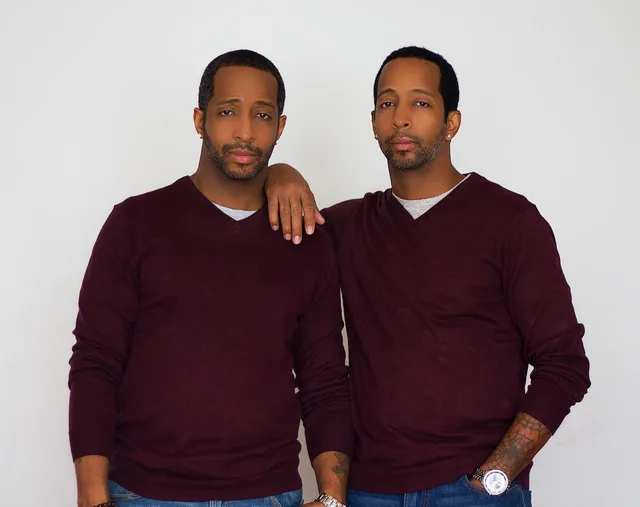
| Two members of one band | Even if both are public adults, the comparison is a pairing and is not published. The reviewer can consider whether the actual observation concerns shared styling. |
| An unsigned or local musician | A small following alone does not establish the public role used in the review. |
| A musician's child | The submission concerns a child, not an eligible adult musician. |
Music inbox rulings
Passes question two
- Named working musician
- Judged on content
- Tribute performer, fan-submitted
- No
- Tribute performer, self-written
- Welcome
- Session or touring musician
- No
- Audience member
- No
- Fan who looks like artist
- No
- Two band members
- Both may pass
- Unsigned or local musician
- No
Private individual
- Named working musician
- Pairing not published
- Tribute performer, fan-submitted
- Likeness is their livelihood
- Tribute performer, self-written
- About themselves
- Session or touring musician
- Paid to stand behind
- Audience member
- Often a minor
- Fan who looks like artist
- Often a teenager
- Two band members
- Pairing not published
- Unsigned or local musician
- Small following
Refused and deleted
- Named working musician
- Resemblance claim unpublished
- Tribute performer, fan-submitted
- Name withheld
- Tribute performer, self-written
- Best material received
- Session or touring musician
- Not a public figure
- Audience member
- Refused and deleted
- Fan who looks like artist
- Refused and deleted
- Two band members
- Styled alike on purpose
- Unsigned or local musician
- Not a public role
These rulings keep the reviewer's task narrow. The question is not whether a person is visible, works in music, or has been photographed publicly; it is whether the submission can be considered without turning the site into a way to identify people or publish a face-to-face claim. The US children's privacy rule defines a child as an individual under the age of 13, which is a separate line from the public-adult question.
Treat shared styling as its own subject
A submission comparing two members of one act, or performers from one label, may point to a real visual resemblance. But the performers may have been dressed, lit, and photographed to look alike. The reviewer should not turn an observation about presentation into a claim that the faces match.
That distinction gives the desk a useful alternative subject: styling. A message can describe a shared look as an observation about how the performers are presented. It cannot be published as a face-match claim merely because the same visual effect appears in both images.
The photography discussion covers how those choices can affect comparisons, and the musician lookalike mistakes cover persona, styling and eras. In reviewing a submission, the key is to name whether the claim concerns the image or the faces.
The same care applies to a tribute act. A fan's comparison asks the site to judge the performer's likeness. A tribute performer writing about their own practice offers a different perspective: an account of the work involved in building the act.
The professional lookalike trade is under-described by the people who do it, making that first-person subject more useful than a fan's verdict on someone else's face. The professional lookalike submission rules set out the related rules.
What a fan can send instead
A message that does not work as a pairing may still contain a distinct music or photography subject. The reviewer can look for one of these four forms without carrying the comparison forward:
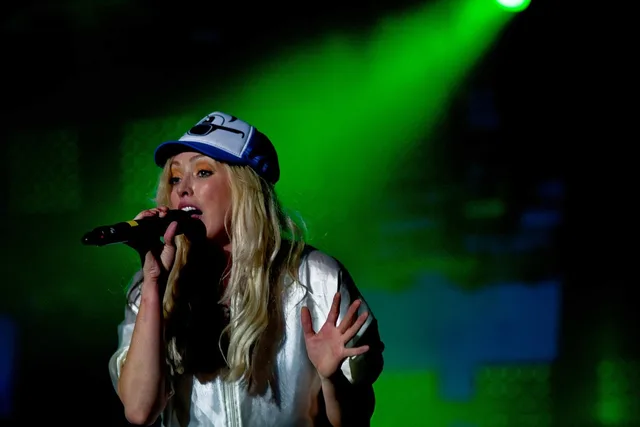
- A concert photograph the sender took, with an account of what the light or lens did to the performer's face.
- A correction to something the site has published.
- A first-person account of being told the sender resembles a performer, without naming a third party.
- A tribute performer's account of their own practice.
The FBI advises people to remove EXIF data before sharing images with others or posting them online, which matters for any photograph a sender attaches.
What a fan can send
- Concert photograph with account of light and lens
- Correction to anything published here
- Your own experience of being told you resemble a performer
- Tribute performeranything about your practice
For a borderline message, the reviewer can describe the distinction plainly: is it about the image or a person, a public role or proximity to a stage, an observation or an identification request, one subject or an implied pair, and a face claim or another topic?
That keeps the ruling tied to what the submission actually contains, not to how strongly the sender believes the resemblance.