
Guides
Part of Why musician lookalikes owe more to styling than to faces
Musician lookalikes comparison: which photos can be trusted
Musician lookalikes comparison starts with the photo: what stage, studio and video images do to a face, and which named pairs can pass a fair test.
What to take away
- Every musician lookalikes comparison is really two comparisons: two faces, and the two sets of photographic conditions that made them.
- Three kinds of image circulatestage photographs, studio and press images, and video frames. Each changes the face in its own way.
- Concert photography flattens faces the same way for everyone on stage. Album and press imagery is art-directed and retouched.
- The everyday face of a musician is almost never the one in circulation, so comparisons run between two performances.
- A fair comparison would need images neither team produced, and those hardly exist.
- Of six much-shared pairs, Keith Richards and Ronnie Wood clear the test most often. Harry Styles and Mick Jagger mostly fail it.
Three kinds of photo, three kinds of change
Identify the kind of image before you judge the faces. The table sets out who decides how each kind looks, what it does to a face and the sign that gives it away.
| Kind of image | Who decides the look | What it does to a face | Sign to look for |
|---|---|---|---|
| Stage photograph | The lighting designer and the photographer's position in the pit | Compression, a low angle, gel colour, grain, blur | Flattened features, a low angle, one unusual hue |
| Studio or press image | The brief, the stylist and the retoucher | Chosen light, chosen styling, chosen finish | A designed cover, or a picture that is not a plain photograph |
| Video frame | The colour grade and the movement | A grade over everything, features caught mid-movement | Blur, and a tint across both faces |
The pit: six things it does to every face
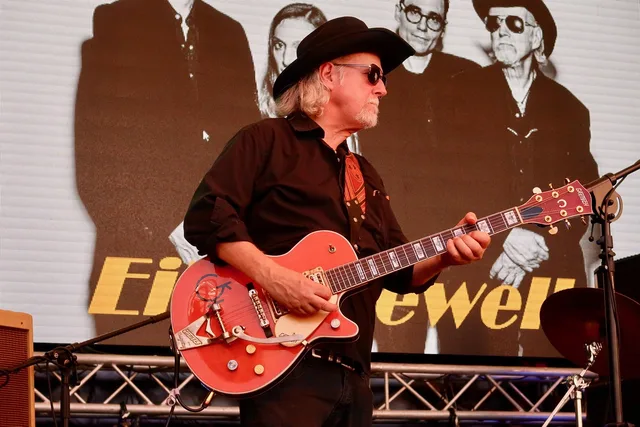
A live photographer works from a narrow space at the front of the stage, for a limited number of songs. The lens is long, the subject is moving, and the light is whatever the lighting designer chose for that moment.
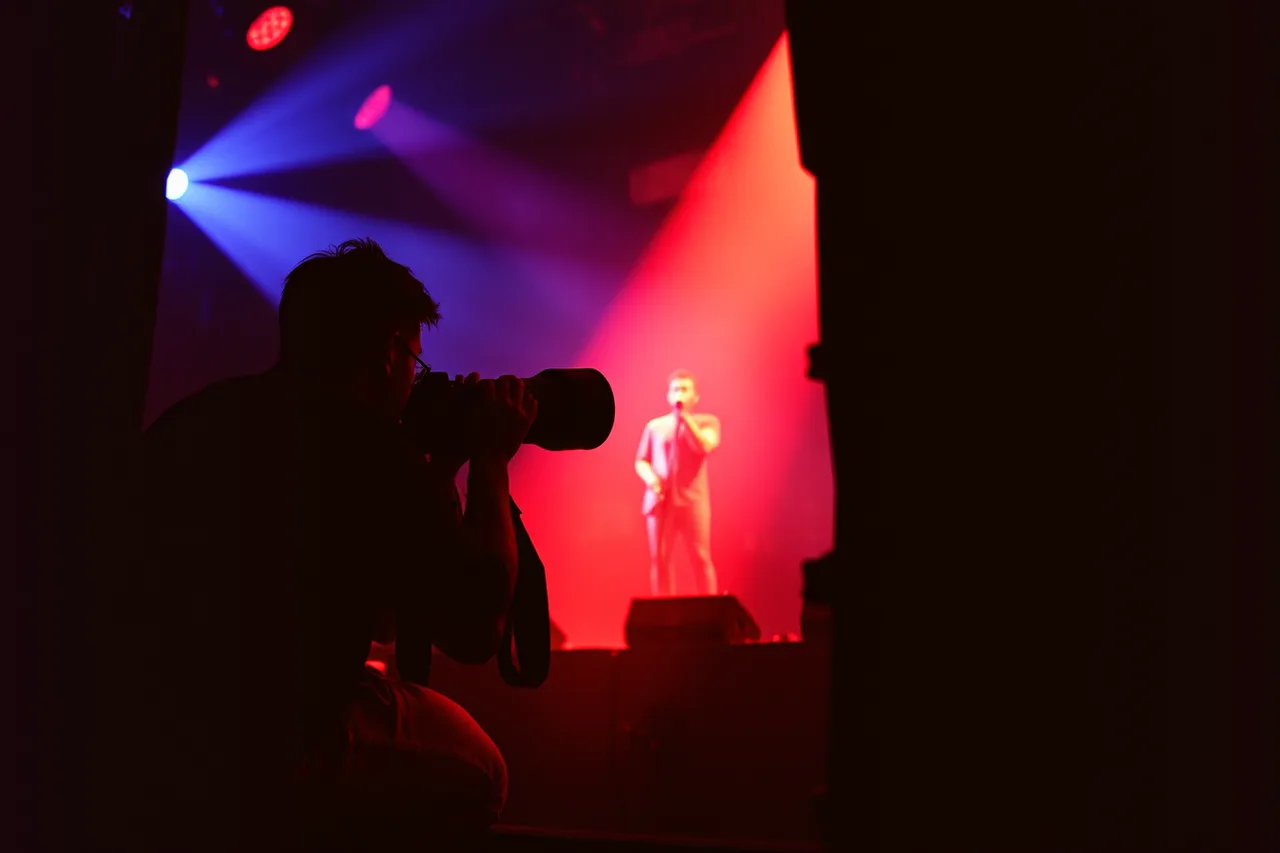
- The long lens compresses the face: the nose sits back, the ears come forward, the face flattens. Every performer shot from the pit gets the same compression. Camera distance does this to everyone, and here everyone is at the same distance.
- The upward angle shortens the forehead, widens the jaw and puts the underside of the chin in the frame. It is a view of a face that hardly exists outside a stage.
- Coloured light replaces skin tone with the gel colour. Two people under the same red wash have the same skin.
- Smoke and haze soften every edge and reduce contrast, removing fine detail from all faces equally.
- Low light forces a high sensitivity setting, which adds grain and eats texture.
- Motion blurs the features that would distinguish one person from another and leaves the outline, which is hair, hat and instrument.
The result is a genre. A live photograph of one performer looks like a live photograph of another because the genre's constraints are stronger than the differences between the faces. Recognition at distance runs on outline for the same reason.
The studio: a brief, not a record
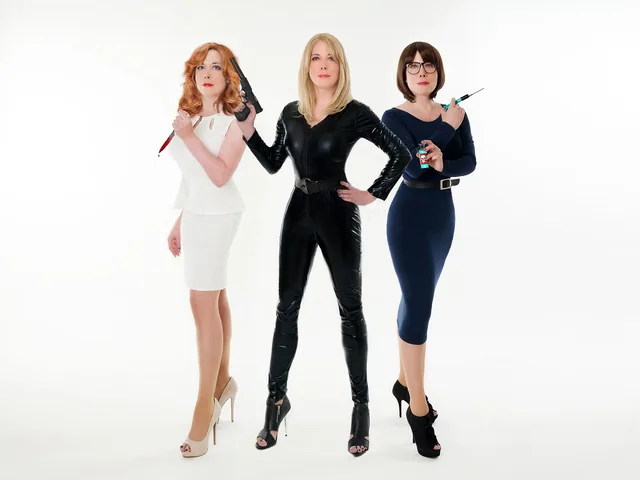
Away from the stage, the images come from a brief. An album cover is designed. A press shot is directed.
The performer is styled to the current release, lit to a chosen mood using an arrangement of key, fill and back light that is taught as a standard, and retouched to a chosen finish.
The room where the record is made has a control surface, an acoustic design and a set of house habits. The room where the pictures are made has the same. Neither is neutral, and neither is visible in the finished product.
Sometimes the cover is not a plain photograph but an illustration, a heavily processed composite or a picture of something other than the performer's face.
Two musicians working in the same genre at the same time are briefed within the same visual conventions, because the conventions are what tells a buyer what kind of record this is. Their images agree because the briefs agree. The look is a stack, and the studio is where the stack gets built.
Video frames add a grade
A frame pulled from a video is often the third kind of image people compare. It is usually worse than a photograph for the job. A video frame adds a colour grade to everything above and is often taken mid-movement.
That is why comparisons of the wide-trousers-and-scarf kind, such as those that put Harry Styles beside Mick Jagger, mostly fail the test below. Nearly every frame in circulation is a stage shot or a video still.
Where the face drops out: uniforms and masks
Some looks are decided at band level. The Ramones' four identical bowl cuts were a band decision, not a photographer's accident. A stylist can make two faces read as one genre.
Masks are the honest extreme. Masks finish the argument: Slipknot's nine members wear masks on stage, so the press image is the mask and the face behind it is a rumour. Slipknot has changed its members' masks between album cycles, so two press images from different years may compare two designs rather than two people.
Kiss wore makeup from 1973 until 1983, which made two faces interchangeable under one design. Paul Stanley's face was not public until the band removed the makeup in 1983. Daft Punk's Thomas Bangalter and Guy-Manuel de Homem-Christo wore robot helmets for most of a career that ended with a split announced in February 2021.
The face that is never photographed
Between the stage and the studio there is a person who gets up, goes out and looks like nobody in particular. That face is almost never in circulation, because nobody is paid to photograph it and the performer has no reason to distribute it.
What circulates is the performed face, under performance light, in performance styling. Neither person is in it as themselves. A musician often resembles a fellow performer far more in circulated images than either would in a queue, because the queue would show the faces and the images show the genre.
Performers who impersonate musicians for a living know this precisely. The tribute trade reproduces the performance, the styling and the light, and its practitioners are candid that the face underneath is often quite different.
What a fair comparison would need
To compare two musicians as people rather than as products, you would want images that meet five conditions.
What a fair comparison needs
- Not made by either performer's team
- Conversational distance, at eye level
- Daylight or plain room light
- Still, with a neutral face
- Same year for both performers
- Neither musician's team produced the image.
- Both were taken offstage, in ordinary daylight.
- Both come from the same year.
- Both were taken at a similar distance and angle.
- Neither shows costume, makeup, a mask or a designed finish.
Almost no such images exist for a working musician, and the ones that do are exactly the ones nobody shares. A comparison that cannot meet the list is a comparison of two genres of photograph, and should be read as one.
Image quality matters even for machines. In NIST's 2019 Face Recognition Vendor Test report on demographic effects, comparing high-quality application images with lower-quality border crossing images gave higher false negative rates than comparing the application photos.
Six named pairs against the five conditions
Applied to pairs people actually share, the five conditions split them quickly. The deciding column is whether offstage photographs of both people exist from the same year.
| Pair | Offstage photos of both, same year | What the record shows |
|---|---|---|
| Mick Jagger and Steven Tyler | Yes, both photographed offstage for decades | Offstage, the jaw and hairline differ; stage styling and the pit angle do the resembling |
| Keith Richards and Ronnie Wood | Yes, same-year pairs are easy to find | Clears the list more often than the rest: one band, one wardrobe department |
| Liam and Noel Gallagher | Yes | Sibling resemblance survives the pit and the studio |
| Harry Styles and Mick Jagger | Rare | Mostly fails: nearly every frame in circulation is a stage shot or a video still |
| Joey and Johnny Ramone | Possible | Most circulated frames are stage frames, under one band uniform |
| Paul Stanley and Gene Simmons | Yes, from 1983 on | Before 1983 the Kiss makeup hid both faces |
Richards and Wood clear the list because both have been photographed offstage in daylight for fifty years. How these and other pairs hold up against experience is the subject of musician lookalikes pairs.
Reading a comparison you have been shown
Run these checks on any pair of images before you trust the match.
- Identify the source of each imagestage, studio, video frame, press. If they differ, the two faces were not made the same way.
- Look for the lens. Flattened features and a low angle mean the pit.
- Find the light colour. If both faces are the same unusual hue, the hue is doing the resembling.
- Check the hair and outline. Remove them and see what remains. Take away the Ramones' bowl cuts or Kiss's makeup and the comparison changes shape.
- Ask who chose these frames, and how many they looked through first.
Common questions
Are video frames better than photographs for comparison?
Usually worse. A video frame adds a colour grade to everything above and is often taken mid-movement.
Why do musicians in the same genre look alike?
Because they are styled, lit and photographed to the same conventions, which exist so a buyer can read the genre at a glance.
Does this apply to musicians who are rarely photographed live?
Then the studio half applies on its own, and the brief is doing the work instead of the pit.
Which named pair comes closest?
Richards and Wood, on the record: they share a band, an instrument type and a wardrobe, so nearly every image of the two was made under the same conditions. Liam and Noel Gallagher are the genetic case, since brotherhood survives daylight as well as stage light.