Features
Part of Why your brain is primed to spot celebrity lookalikes everywhere
Celebrity lookalikes pairs: how acts build a match
Celebrity lookalikes pairs such as Michael Jackson and Navi, and Queen Elizabeth II and Jeannette Charles, show how styling and performance shape a match.
Celebrity lookalikes pairs such as Michael Jackson tribute performer Navi and Queen Elizabeth II lookalike Jeannette Charles show how a match can depend on costume, makeup, voice, and performance as much as facial resemblance. The examples below show what carries each act and where a resemblance claim can break.
What to take away
- A bookable lookalike is usually a tribute act with a set list, a costume and a fee, not a person who merely resembles someone.
- Rates in the US, Canada and the UK are quoted per hour or per day, before GST/HST or VAT, and agency commission comes out of the client's total.
- Match decisions rest on interpupillary distance, jaw width, hairline and build, and on gait when the face is covered.
- Reverse-image search, EXIF review and portrait-format dating catch most bad claims before you pay a deposit.
The acts, and what each one rests on
Elvis Presley. The largest tribute market in the world, with hundreds of working acts across the US, Canada and the UK. A bookable Elvis is a performer: jumpsuit, set list, backing tracks or a live band.
Bookings run through agencies such as Legends in Concert and Graceland's official tribute roster. The resemblance is largely hair, sideburns and build, which is why the 1950s and 1970s versions read as different bookings.
What carries each lookalike act
Performer
- Elvis Presley
- Hair, sideburns, build
- Michael Jackson
- Costume, fedora, dance
- Freddie Mercury
- Moustache, jacket, mic stand
- Amy Winehouse
- Beehive, eyeliner, wardrobe
- David Bowie
- Costume and makeup eras
- Lady Gaga
- Wardrobe changes
- Adele
- Hair, eyeliner, black dress
Resemblance carried by
- Elvis Presley
- Michael Jackson
- Freddie Mercury
- Amy Winehouse
- David Bowie
- Lady Gaga
- Adele
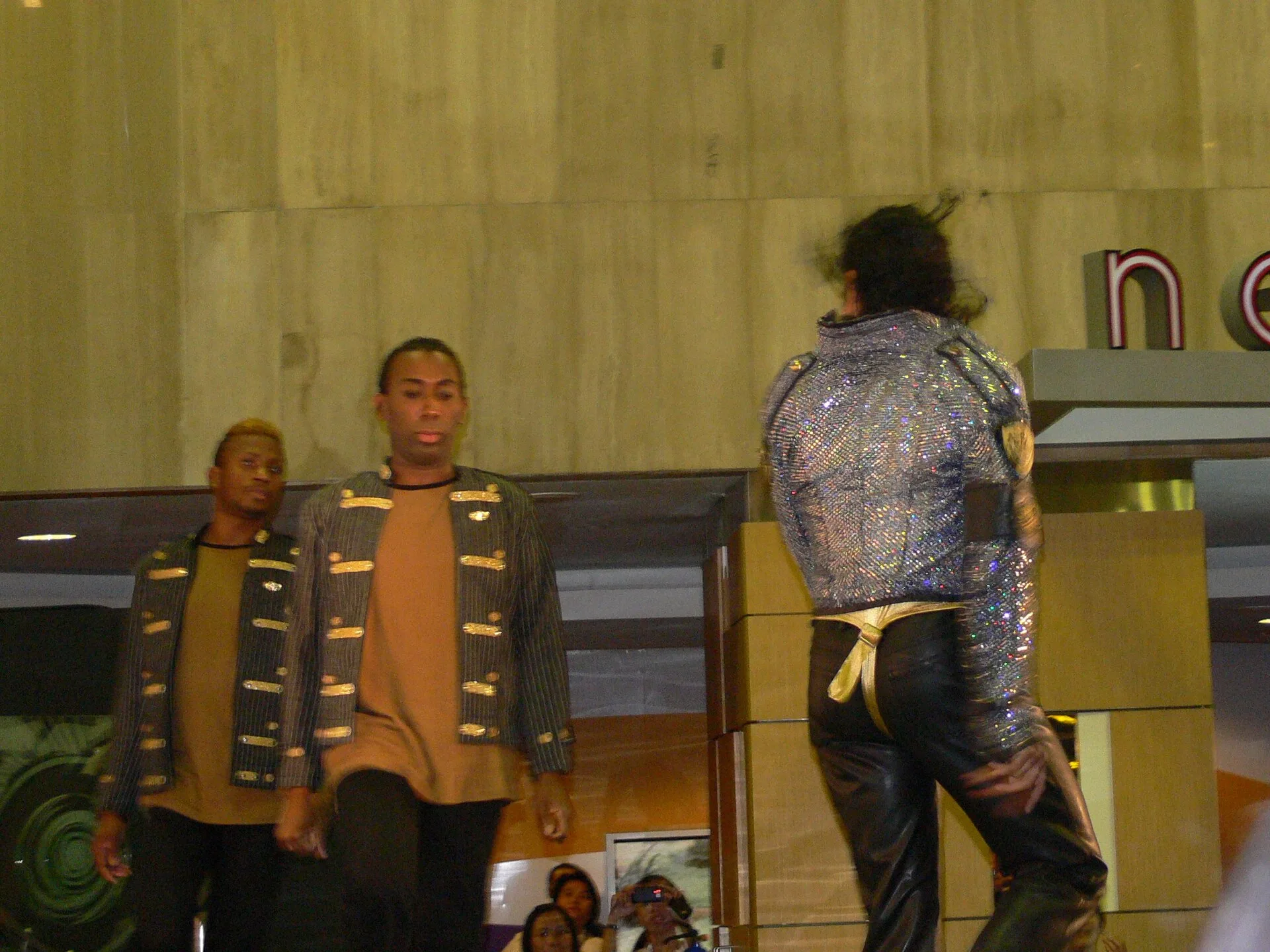
Michael Jackson. Thriller-era costume, fedora and dance routine carry the act. Bookers ask for the moonwalk and the glove. Michael Jackson tributes are booked through agencies such as Legends in Concert and specialist impersonators including Navi. The face itself is rarely the deciding factor once the staging is in place.
Freddie Mercury. The moustache, the yellow jacket and the mic stand do most of the work. Tribute bands rather than solo acts dominate, because Queen's catalog needs a full band to sound right. Queen Extravaganza and Gary Mullen and The Works are two long-running examples.
Amy Winehouse. Beehive, winged eyeliner and a beehive-era wardrobe. This is a makeup-led resemblance, and it collapses the moment the styling comes off. UK agencies such as The Tribute Company list Amy Winehouse tribute acts.
David Bowie. Ziggy Stardust and Aladdin Sane looks are costume-and-makeup constructions. The thin white duke era is closer to an ordinary suit and a haircut, and books differently. The Bowie Experience is a long-running UK tribute band.
Lady Gaga. Booked for the meat dress, the Joanne hat and the piano. The resemblance is built from wardrobe changes rather than a single look. Bookings run through agencies such as Legends in Concert and The Tribute Company.
Adele. Hair, eyeliner and a black dress. One of the few pairings where a singer's own voice is the selling point, so bookers ask for vocal range before they ask for a photograph. UK agencies such as The Tribute Company list Adele tribute singers.
Queen Elizabeth II. A fixture at county fairs and street parties, judged on hat, handbag, coat and wave. Judging rubrics at these events score costume and bearing, not facial geometry. Jeannette Charles was the best-known Queen Elizabeth II lookalike.
Gordon Ramsay. Booked for restaurant openings and corporate events. The hair and the scowl are the whole act, and it works best in motion. UK lookalike agencies such as Susan Scott Lookalikes represent Gordon Ramsay doubles.
Dwayne Johnson. Build, shaved head and eyebrow can make a resemblance body-first; a photograph alone will not tell you whether a match works in motion.
For athletes, where build and gait carry more than the face, the same logic runs through athlete lookalikes.
What a booking actually costs
US, Canadian and UK rates are quoted per hour or per day, before GST/HST or VAT. Agency commission is taken from the client's total, not added on top of the talent's fee.
Booking cost variables
- Hhourly rate
- Dday rate
- Ccommission percentage
- Tapplicable tax rate
Work out your own budget with named variables:
- Let
Hbe the hourly rate andDthe day rate. - Let
Cbe the commission percentage in your agency agreement. - Let
Tbe the applicable tax rate. - Client cost =
(H x hours) x (1 + C) x (1 + T).
Typical agency quotes, before tax and commission, are $1,500 to $5,000 for a US solo tribute act for a 60-minute set, and $5,000 to $15,000 for a full band. Canadian quotes often run C$1,000 to C$4,000 for solo acts and C$3,000 to C$10,000 for bands.
UK rates are often £600 to £2,500 for a solo act and £2,000 to £6,000 for a band.
Buyout and exclusivity clauses change the number. A buyout lets the client keep using the footage after the event; exclusivity stops the performer taking similar work within a radius or a time window. Both are priced separately, and both belong in front of a licensed attorney before signing.
The measurements that decide a match
Interpupillary distance, jaw width, hairline shape and build are the four that bookers and casting directors check first. When the face is obscured by a helmet, a mask or a costume, gait takes over.
A typical adult interpupillary distance is about 63 mm, with a range of roughly 58 mm to 72 mm. A bigonial jaw width of 115 mm sits within the typical adult male range of 100 mm to 120 mm.
Casting directors in Georgia work under the state's film tax credit rules, and California agencies operate under their own licensing regime. Union status (SAG-AFTRA or Actors' Equity, depending on the work) changes the rate card and the paperwork. None of this is a resemblance test; it is the commercial frame the resemblance sits inside.
How to check a claim before you pay
- Run a reverse-image search on every supplied photograph.
- Read the EXIF data for camera, date and location.
- Check the portrait format against the era being claimed.
- Put the image side by side with a primary source, not with another fan edit.
- Watch video. Most pairings do not survive ten seconds of footage.
Retouched and mislabelled photographs are the most common failure. So is a caption that outruns the sitting it came from. Where the images come from is covered in lookalike comparisons.
Why the pairing format spreads
The two-faces-and-a-caption unit costs nothing to make, resolves in under a second, and cannot be settled. Disagreement is the engagement, so the borderline case outperforms the obvious one.
Face perception is suggestible. Supplying the frame before the evidence changes what gets noticed. Show two faces with the question already asked and viewers find correspondences, because almost any two faces share several. Show them separately and most people see two people.
The format manufactures its own evidence, then presents the impression's popularity as confirmation.
The two claims people slide between
It starts as these two look similar, which is harmless and unfalsifiable. Then it becomes that's the same person. That second sentence is an identification, and crowd identifications from photographs have a bad record.
The interest a person holds in their own name and likeness sits in state law, not in one federal statute: California's Civil Code section 3344 and New York's Civil Rights Law sections 50 and 51 are the two most often cited. The general category is personality rights.
A pairing is not symmetrical. One name is the reference, the other is the variant: the discount version. The second position is a public comment on someone's face, made by people who will never meet them.
Search results keep it there for years. Why the format is presented as a discovery rather than a selection is covered in celebrity lookalikes comparison.
Everything above concerns people with an audience and some means of reply. Run it on a private individual and it becomes an identification, not a comment. That is why this site publishes no pairings involving private individuals, and none involving minors. The policy is in user submissions.
For pairings that cross national tribute markets and the different rate cards behind them, see international lookalikes.
Common questions
Can I book a lookalike without a tribute act behind them?
Rarely worth it. A performer with a set list, a costume and a sound check delivers a bookable hour. A person who merely resembles someone delivers a photograph and a difficult event.
Why do so many pairings fall apart on video?
Because a still image hides gait, voice, height and manner. Ten seconds of footage tests all four at once, and most pairings do not survive it.
What should I ask an agency before paying a deposit?
Ask for the talent's union status, the commission percentage, whether the quote includes tax, and the buyout and exclusivity terms in writing. Take the contract to a licensed attorney.
Is a resemblance claim something I can have removed?
In practice, no. There was never a claim with a procedure behind it, only an impression that got repeated. Where a commercial use of a name or likeness is involved, the relevant authority is the USPTO for marks and the FTC for advertising claims, and a licensed attorney for anything specific to your situation.