Industry
Part of Why Historical Lookalikes Rarely Hold Up
Historical lookalikes mistakes: a six-line record sheet
Historical lookalikes mistakes start in the record. Fill in a six-line sheet on the sitter, dates, process, retouching, pose and medium before comparing faces.
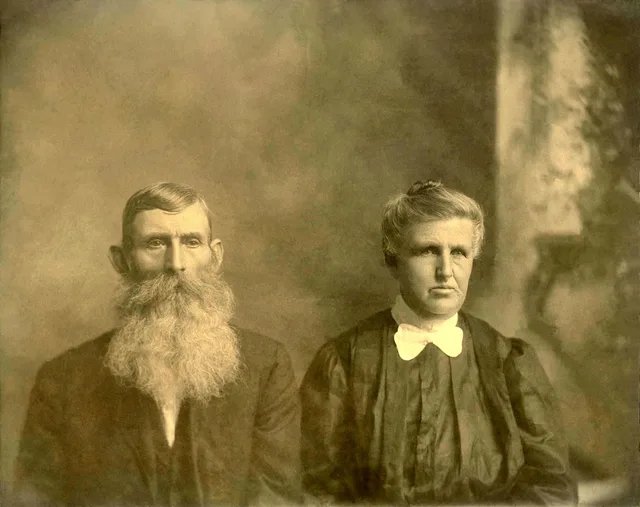
Before two faces can be compared, the old image needs a record: who says the sitter is who, when the sitting happened, and which process made the picture. Even a familiar pairing, like the nineteenth-century portrait that circulates as a Nicolas Cage lookalike, rests on a caption, a date and a process, and any of the three can be wrong.
What to take away
- The name on an old photograph is a claim, usually made long after the exposure by someone who was not there.
- Three dates hang on every printthe exposure, the print and the record. Only the first sets the sitter's age.
- Early direct-positive processes could reverse the face, so compare both orientations before judging a resemblance.
- A painted portrait and a photograph are two different media, and a resemblance between them is a resemblance between conventions.
Write the record before you compare
Fill in a short record sheet for the old image before looking for a living double. Each line asks who says so, and whether the answer is known or only assumed. A blank line is a finding, not an inconvenience, and the sheet has six lines.
| Line | Question to answer | What to do about it |
|---|---|---|
| Sitter | Who says this is the person, and how did they know? | Find the source of the identification; treat a caption alone as provisional |
| Dates | Which of the exposure, print and record dates are known? | Mark each as known or assumed; "circa" means a guess |
| Process | Which process made the plate, and could it reverse the face? | Compare both orientations |
| Retouching | What did a retoucher smooth or reshape? | Compare the ears, hairline and hands |
| Pose | What was the sitter told to do? | Do not credit a blank expression to the face |
| Medium | Photograph or painting? | Compare painted portraits with each other first |
The sections below take the lines in order. The record you check against lives in a named place: the Library of Congress Prints and Photographs Online Catalog, the National Archives catalog, a museum's accession record, or a Wikimedia Commons file page. It should say how the identification was made.
The sitter line: a caption is a claim
An archive photograph has a name because somebody attached it. Often that was a relative sorting a box decades later, working from family memory, or a cataloger matching a face to a name already in the collection. Either way, the name was usually added long after the exposure.
Names migrate between siblings, cousins, and unrelated sitters who happened to be filed together. Institutional collections carry corrections for exactly this reason. The Library of Congress's Prints and Photographs Division, the National Archives, the Getty Research Institute, the National Portrait Gallery and Wikimedia Commons all publish revised identifications when a caption turns out to be wrong.
For a famous historical figure, the answer may be well established, with several independent images to compare. For most sitters, it is one caption, written by one person, from memory. That difference decides how much weight a comparison can bear.
The tintype that has circulated since the 2010s as a photograph of Billy the Kid playing croquet is the same problem inside one object: one plate, one identification, and historians who still disagree about who is in it. A sitter nobody can settle is not a safe foundation for a comparison to a living face.
Look for the source of the identification. If the only source is the caption, treat the name as provisional, and treat any resemblance claim built on it as resting on a guess. A reverse-image search can turn up earlier copies and the captions they carry. Once a name is attached, suggestion does the rest.
The date line: three dates, one sitting
A date written on the back of a print is frequently the date of the print, not the exposure. Negatives were reprinted for years, and studios reissued popular portraits. Two prints of the same sitting can carry dates a decade apart.
A collection stamp records when the item was accessioned. Catalog records keep those dates apart on purpose. The Library of Congress and the National Archives describe a photograph by its date of creation, its date of publication and the date the item was accessioned. They fall back on "circa" when none of the three is known.
A record that says "circa 1890" is telling you the date is a guess. The date matters for resemblance because it sets the sitter's age. Compare a print dated 1905 that was actually exposed in 1885 and you have the wrong age by twenty years, which changes which living face it seems to match.
Separate the date of the exposure, the date of the print and the date of the record, and mark each as known or assumed. How period photographs were produced explains why so few of these dates were recorded at the time.
The process line: was the face reversed?
The early direct-positive processes are the ones to suspect. The daguerreotype, the ambrotype and the tintype, also called the ferrotype, each carry the finished image on a single plate. Unless the camera held a reversing prism or the photographer turned the plate, the viewer sees a mirror image.
The sitter's parting falls on the wrong side. A mark on the left cheek appears on the right. An asymmetric jaw is asymmetric the other way. Not every old process reverses, and the calotype shows why: it is a paper negative, and a negative-print process carries the picture through a different chain.
Reversed vs. true orientation
Reversed plate
- Parting
- wrong side
- Cheek mark
- left appears right
- Asymmetric jaw
- mirrored
- Resemblance
- may vanish
Corrected print
- Parting
- true side
- Cheek mark
- left stays left
- Asymmetric jaw
- true shape
- Resemblance
- may survive
So the check is never "old photographs are mirrored." It is "which process made this plate, and did that process reverse it?" Faces are not symmetrical, and the asymmetries are part of what the eye uses. If reversal is possible, compare both orientations. Flip the image and the impression can change entirely, in either direction.
The retouching line: what the retoucher left alone
Hand retouching of negatives was routine studio practice. Negative retouching, worked in pencil or graphite on the collodion side, smoothed skin, narrowed a nose, lifted a jawline or removed a blemish. Commercial portrait studios employed retouchers as a matter of course, and the airbrush later made heavier work faster.
The customer expected it. What survives is a face partly drawn by a retoucher working to the taste of the period. Modern portraits are retouched too, to a different taste, so a comparison between them compares two retouching styles laid over two faces.
Look at the parts a retoucher left alone, usually the ears, the hairline where it meets the skin, and the hands, and ask whether the resemblance lives there or only in the smoothed center of the face. If it lives only in the center, the retoucher is doing a share of the agreeing.
The pose line: held still for the exposure
Long exposures required stillness. Sitters were braced, sometimes clamped, told not to smile, and posed at the angle the studio used for everybody: a neutral, held face, lit from one window, turned to one angle. A room full of Victorians shares an expression for that reason.
Expression is a large part of what makes a face distinctive. Remove it from everyone and everyone converges. A living performer photographed in a deliberately neutral, held pose will converge with them too, which is why the modern half of these pairings is so often a studio headshot rather than a candid.
When a modern picture has been chosen with a matching blank expression, the match is between two instructions to hold still, not between two faces. Ask what the sitter was told to do before asking who the sitter resembles.
The medium line: photograph or painting?
Before photography, a likeness was a painter's product. Painters worked within period conventions: the length of the face, the size of the eyes, the fashionable set of the mouth, the flattering of a patron. Two sitters painted by the same school look alike because the school painted faces alike.
Putting a painted historical figure beside a photographed modern one compares a convention against an optical record. Whatever agreement appears belongs partly to the painter. The eye is trained on the faces it has seen, and it has seen very few painted ones, so it is poorly placed to discount the convention.
If more than one painter portrayed the sitter, compare the portraits to each other first. The amount they disagree is the amount you cannot trust any one of them. For one famous sitter, assessing a historical figure match goes further.
Fill in both columns
For the old image, note who says this is the sitter, what date is established, whether the image could be reversed, and what a retoucher and a head rest contributed. Then ask whether the source is a photograph at all.
Six-point comparison check
- Who says this is the sitter?
- What date is established?
- Could the image be reversed?
- What did a retoucher change?
- What did a head rest contribute?
- Is the source a photograph at all?
Ask the same of the modern image. A fair comparison needs both columns filled in, and most of the historical pairings that circulate could not fill in the first: no named source for the caption, no confirmed date, no process identified.
Common questions
Are institutional archives reliable about who is in a photograph?
More reliable than a family box, and still revised regularly. The Library of Congress, the National Archives and Wikimedia Commons all publish corrections, so look for the catalog record or file page that says how the identification was made.
Does a reversed image really change a resemblance?
Often. Asymmetry is part of individual appearance, and a flip inverts all of it at once.
What if the old image is a famous, well-documented sitter?
Then the identity question is settled and you can move to the others. The head rest, the retouching and the process still apply.