Guides
Part of Why Historical Lookalikes Rarely Hold Up
6 parts of historical lookalikes updates, explained
Historical lookalikes need a version record in 2027: restoration and colorization generate detail, and a claim has to say which object it describes.
What most likely changes how an old photograph looks this year is not a discovery about the sitter but a new version of the picture. Old images are now routinely sharpened, upscaled, colorized, and set in motion.
Each operation makes an object that did not exist before, and a resemblance noticed in it is a resemblance to it. Keeping a page about historical faces current means tracking which version anyone is looking at.
What to take away
- Upscaling and restoration do not recover detail. They generate it, from what the software has learned faces usually look like.
- What it has learned comes from recent photographs, so restored historical faces drift toward modern faces, and toward each other.
- Any statement about an old image needs to say which object it refers to: the plate, a print, a scan, or a processed derivative.
- The living half of a period-and-present comparison keeps changing while the old half does not, so the comparison itself has a date.
The minimum record for any statement about an old photograph:
Field / What to write down
- Source object
- The institution or collection, and which physical item: plate, print, negative
- Copy in hand
- Scan or reproduction, with its resolution and where it was obtained
- Processing applied
- Cropping, flipping, tonal adjustment, upscaling, colorization, animation, or none
- Who applied it
- The archive, a publisher, a social account, or unknown
- Date checked
- When the source was last opened, so a later correction can be found
A page that cannot fill in the third row does not know what it is describing.
The six parts of a historical lookalikes update, explained:
- Source object. The institution or collection, plus which physical item: plate, print, or negative.
- Copy in hand. The scan or reproduction, with its resolution in pixels per inch. The example below uses 600 ppi.
- Processing applied. Cropping, flipping, tonal adjustment, upscaling, colorization, animation, or none. Named tools include DeOldify for colorization, Topaz Gigapixel AI for upscaling, and MyHeritage for one-click colorization.
- Who applied it. The archive, a publisher, a social account, or unknown. The rule is to keep one unedited master file and label every enhanced copy a derivative.
- Date checked. The month and year the source was last opened, as in March, with the next check due in September.
- The living half. For a period-and-present comparison, the performer's frame, year, and source, because the living half keeps changing. An archive record can sit for a year; a comparison against a living subject needs a fresh look every few months.
A restored photograph is a new photograph
A scan of a small, soft, damaged print contains a limited amount of information about the sitter's face. No process can get more out than went in.
When a restoration tool produces a sharp, clean, high-resolution face from that scan, the added sharpness came from somewhere, and where it came from is the tool's model of what faces look like.
Restoration adds invented detail
Original scan
- Detail
- limited, soft
- Source
- surviving information
- Color
- none
- Motion
- none
Restored output
- Detail
- sharp, clean
- Source
- model fill
- Color
- inferred hues
- Motion
- invented
That is not a flaw in the tool; it is what the tool is for. One consequence is that the composite travels further than the scan it came from: it is smaller, cleaner and easier to post, so the scan can drop out of circulation.
Another is that no later researcher can separate the supplied detail from the surviving detail.
An assembled face made of plausible parts reads as a real one, which is why the fill looks like evidence when it is not.
Colorization is the same operation for color. The original carries no color information. Every hue in the output is an inference: skin, hair, eyes, all guessed. Animation goes further and invents motion, expression and a turning head that the sitter never performed, and generated video of a real person's face is now ordinary rather than specialist work.
The tools are ordinary. DeOldify is an open source colorizer, Topaz Gigapixel AI a common upscaler, and family history services such as MyHeritage offer colorization as a single click. Archives commonly keep one unedited master file and label every enhanced copy a derivative. That habit is worth copying at home and on any page about a face.
Why restored faces look like living people
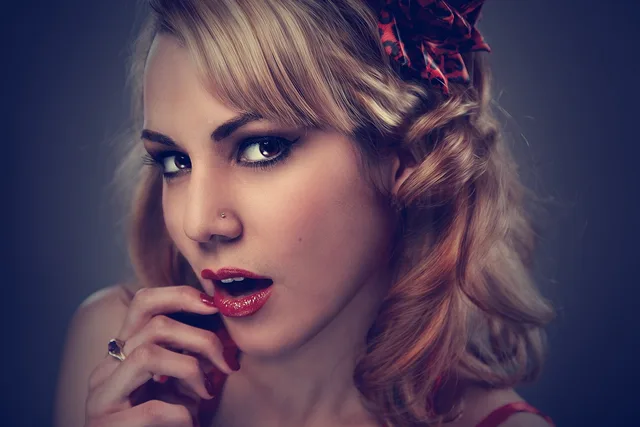
The processing does not stop at the historical side. Publicity images of living performers are commonly retouched and color graded before release, and a restored historical face has had a similar pass of its own. The two meet on a shared modern surface.
This has a direct consequence for resemblance. A restored historical face is closer to a living performer's face than the original was, for reasons unrelated to either person; the fill closed the distance.
The manufactured quality of period photographs was already substantial, and restoration adds a second layer of manufacture, this time the manufacturer has a modern eye.
If a comparison feels much stronger with the restored version than with the original scan, the difference is the restoration.
Which object are you talking about?
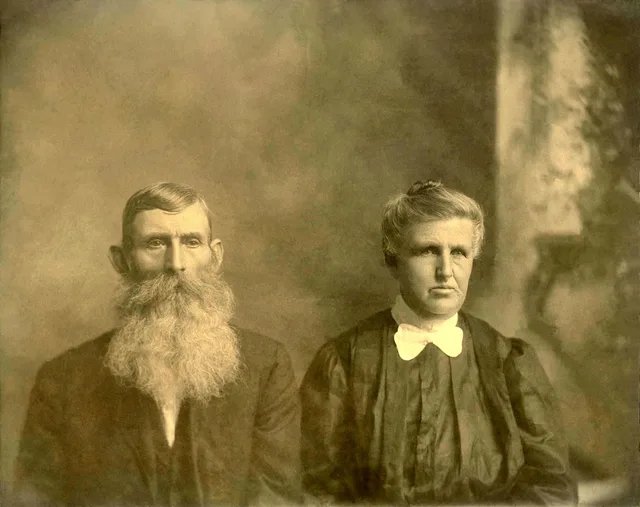
A single old portrait can exist as a glass plate, several period prints, a later reprint, an archive scan at one resolution, a web copy at another, a cropped social-media version, and any number of restored derivatives. They are not the same image, and a claim true of one may be false of another.
An archive keeps a card for the object, not for the picture of it that is circulating. That distinction is the one this section is asking anyone to preserve.
Filled in for one ordinary case, an 1860s carte-de-visite in a small archive, the record looks like this:
| Field | Example entry |
|---|---|
| Source object | A county historical society, album 4, item 12, a carte-de-visite print; no plate is known |
| Copy in hand | The archive's own scan at 600 ppi, downloaded from the online catalogue in March |
| Processing applied | Cropped to the head, upscaled four times, colorized, and one short animation made from it |
| Who applied it | A fan account on a social platform; the archive's own file is untouched |
| Date checked | Reopened in March, the next check due in September |
The colorized and animated copies are the ones most readers will meet, and the record is what lets them find the scan behind them.
What to recheck, and when
Old images do not change, but the historical lookalikes mistakes around them do, and the caption is usually the first thing to drift. The interval depends on the item. An archive record can sit for a year; a comparison against a living subject needs a fresh look every few months.
Recheck list for old images
- Identificationreopen source record
- Derivativesay which version is meant
- Second imagetest the resemblance claim
- Living halfcheck later photographs
- The identification. Archives correct sitter names. A pairing built on an old caption may quietly lose its subject. Reopen the source record at intervals and look for a revision note.
- The derivative. If the version you used has been replaced online by a restored one, viewers now see a different picture than the one described. Say which one is meant.
- A second image. A newly surfaced print or plate of the same sitter is the best test of any resemblance claim. If the second image does not agree with the first, the claim was about a frame, not a face.
- The living half. The performer in a period-and-present pairing keeps being photographed. The frame chosen to match the old sitter was one year's frame. Later images may not match at all, which tells you how much the original match owed to selection. The comparison layout hides this, because it shows one frame and never the others.
The claim that ages worst
Any claim that a living person is the double of a historical figure carries a hidden date. The honest version names the frame, the year, the crop and the conversion.
Written out in full, the claim stops being uncanny, which is the point. Suggestion does the rest once the qualifications are removed.
Corrections
If an old image on this site is misidentified, misdated, or shown in a processed form without saying so, that is the most useful thing a reader can report. Name the version you saw, the page it sat on, and the record you compared it against.
A report that points to the holding institution's own copy is quick to check. A report that names the derivative tells us which file to pull.
The date of the correction matters too, since a page can be right this year and wrong after the next derivative appears. The route for corrections is open and does not require an account or an argument, only the source that shows the error.
Common questions
Is it wrong to use a restored old photograph at all?
No. It is wrong to present it as the original, or to draw conclusions about the face from detail the restoration added.
How can I tell whether an old image online has been processed?
Find the holding institution's own copy and compare. If theirs is soft, small and monochrome and the one circulating is sharp and colored, the circulating one is a derivative.
Does colorization change apparent resemblance?
Yes, because the guessed colors are added to both faces from the same modern palette, and color is a strong cue.